 By Alan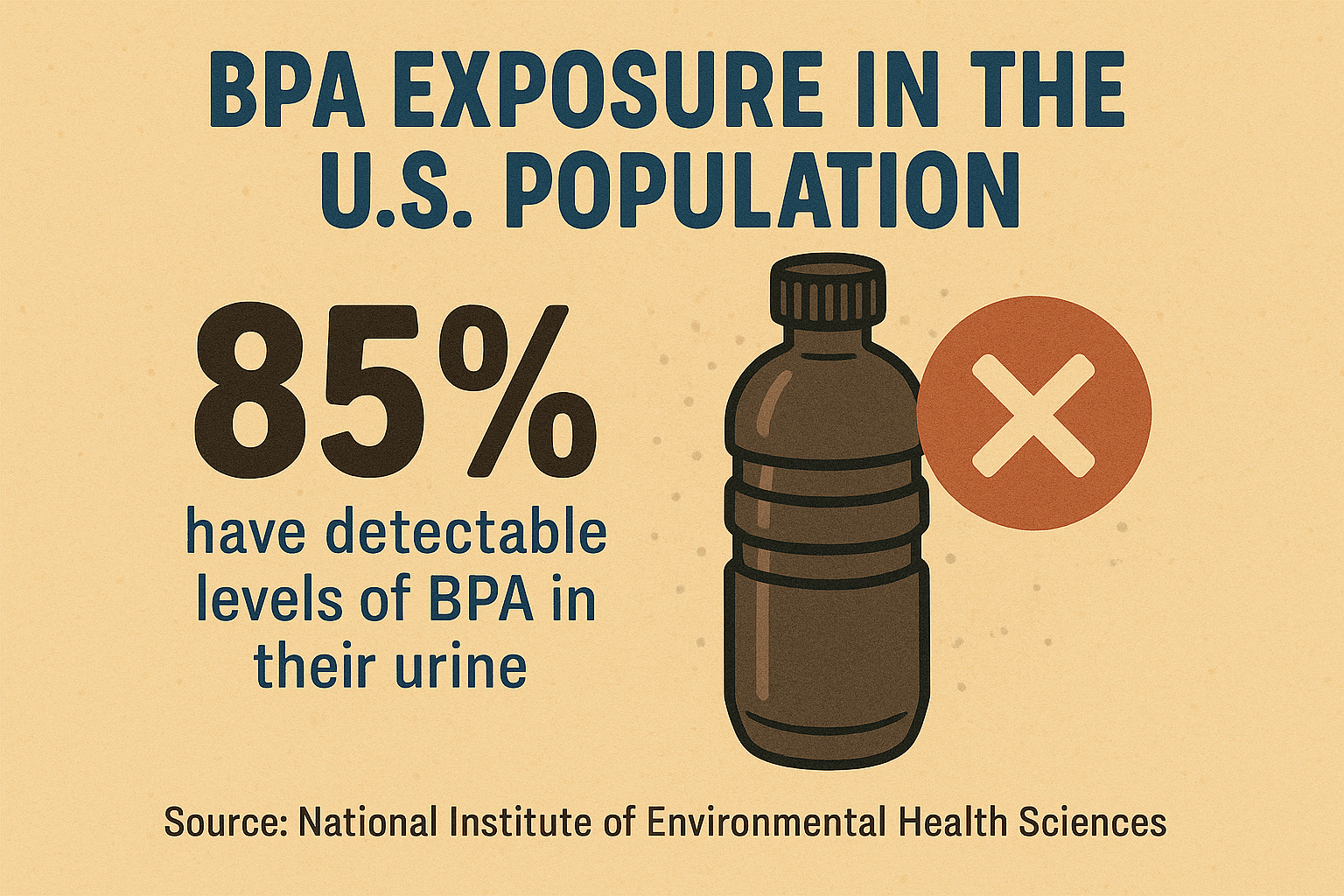
What Is BPA and Where Is It Found?
How BPA Affects the Body
BPA, Aging, and Healthspan: The Longevity Link
Immediate Changes You Can Make
Detox Solutions: How to Support Your Body
Final Thoughts: Clean Living Is Longevity Living
We’re becoming more conscious of what we eat — more greens, less sugar, fewer processed foods. But what about the containers we eat from? In my own health journey, I began to realize that healthy eating goes beyond ingredients. It’s also about exposure to hidden chemicals that might silently work against our long-term health.
One of the biggest culprits? BPA — a synthetic compound that may be undermining your energy, your hormones, and your aging process.
What Is BPA and Where Is It Found?
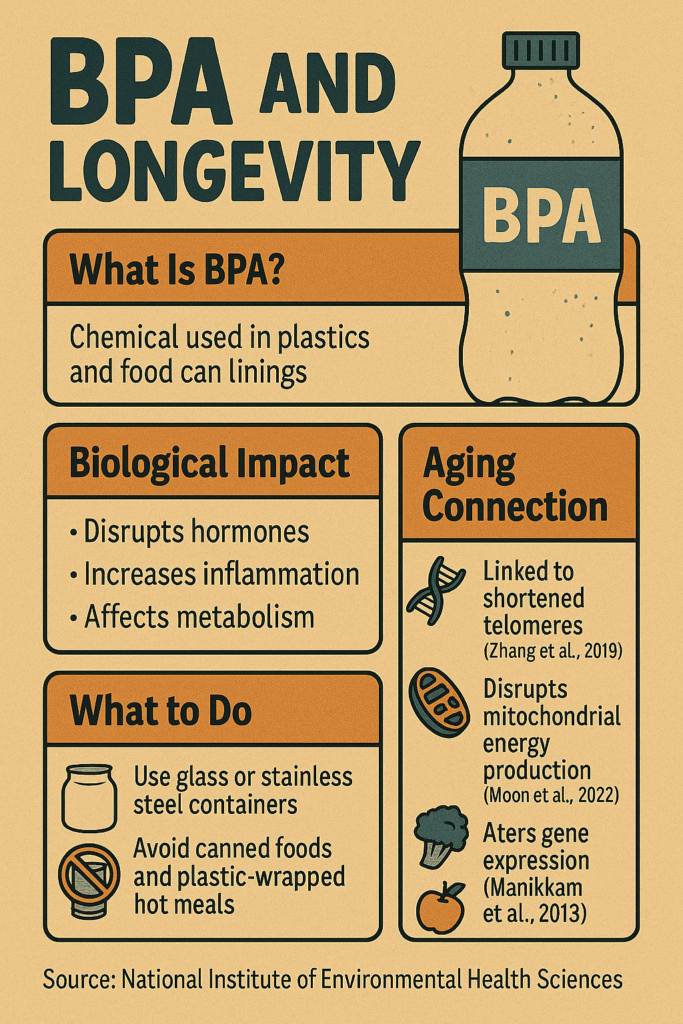
Bisphenol A (BPA) is an industrial chemical that’s been used since the 1950s to make certain plastics and resins. You’ll find BPA in:
- Plastic food and beverage containers (especially marked with recycle codes 3 or 7)
- The lining of canned foods and drinks
- Thermal paper receipts
- Plastic lids, straws, and even some baby bottles
It’s everywhere. And it doesn’t just sit there — it can leach into food and drinks, especially when plastic is heated or exposed to wear.
How BPA Affects the Body
BPA is classified as an endocrine disruptor, meaning it can mimic or interfere with the body’s natural hormones — particularly estrogen. This is especially concerning for people in midlife, when hormone balance is already shifting.
Here’s how BPA exposure can affect us:
- Disrupted metabolism and increased fat storage
- Insulin resistance, raising the risk of type 2 diabetes
- Reduced fertility and altered reproductive hormone levels
- Increased oxidative stress and inflammation
- Possible links to cardiovascular disease and neurodegenerative conditions
In short, BPA is not just a passive chemical. It interacts with your biology — and not in a good way.
BPA, Aging, and Healthspan: The Longevity Link
What does BPA have to do with aging and healthspan?
As we age, our ability to maintain hormonal balance, detoxify naturally, and repair cellular damage starts to decline. Endocrine disruptors like BPA accelerate that decline, pushing our bodies into imbalance and inflammation.
Some recent studies show:
- BPA exposure is linked to shortened telomeres, which are protective caps on the ends of our DNA associated with biological aging.
*(Source: Zhang et al., 2019, Environmental Pollution) - Even low-level BPA exposure can disrupt mitochondrial function, impacting how cells produce energy — a vital process in maintaining youthfulness.
*(Source: Moon et al., 2022, International Journal of Molecular Sciences) - BPA has been implicated in epigenetic alterations, affecting how our genes express themselves over time — a key concept discussed in the field of longevity science.
*(Source: Manikkam et al., 2013, Reproductive Toxicology)
In the context of what scientists like Dr. David Sinclair describe in Lifespan, BPA can be seen as a source of “epigenetic noise” — the biological static that disrupts cellular communication and accelerates aging.
Immediate Changes You Can Make
I didn’t change everything overnight. But once I learned about BPA’s role, I made a few key changes that now feel like second nature. Here are some practical, immediate steps anyone can take:
- Switch to glass or stainless steel containers for food storage and water bottles.
- Avoid microwaving food in plastic — heat increases BPA leaching.
- Cut back on canned foods unless labeled BPA-free.
- Skip plastic cutlery, straws, and lids, especially with hot drinks.
- Ask for email receipts instead of printed ones — thermal paper contains BPA.
These simple shifts help reduce exposure and align with the longevity-focused lifestyle I’m building.
Detox Solutions: How to Support Your Body
There’s no “BPA cleanse,” but your body can gradually detoxify harmful substances with the right support:
- Eat cruciferous vegetables (broccoli, kale, cauliflower) — they support liver detox pathways.
- Hydrate well — water helps flush out stored toxins.
- Increase fiber — it binds to certain toxins in the gut for elimination.
- Sweat regularly — saunas or exercise help eliminate BPA through the skin.
- Get enough sleep — your body’s detox processes peak during deep rest.
Supplements like glutathione, N-acetylcysteine (NAC), or milk thistle may also support detox, but always consult a professional before starting any new protocol.
Final Thoughts: Clean Living Is Longevity Living
Changing how we eat is powerful — but changing how we live is transformative. Learning about BPA reminded me that health is about the entire ecosystem we live in: our food, our environment, our habits, our choices.
Midlife is the perfect time to reset — not just for energy today, but for the decades ahead.
You don’t need to obsess over every plastic spoon. But you can choose to make conscious swaps. Every decision to reduce BPA is a small investment in your future — in clarity, vitality, and longevity.
Sources & Further Reading:
David Sinclair, PhD – Lifespan: Why We Age—and Why We Don’t Have To
EWG BPA Guide: https://www.ewg.org
NIEHS / NTP CLARITY‑BPA Program (2025) — Comprehensive animal and regulatory studies on BPA’s health effects from the National Toxicology Program at the National Institutes of Environmental Health Sciences ScienceDirect+9National Toxicology Program+9Federal Register+9
NIEHS Health Topic: Bisphenol A (BPA) — Authoritative overview of exposure routes, health impacts, and prevention (U.S. National Institute of Environmental Health Sciences) US EPA+5niehs.nih.gov+5National Toxicology Program+5
Zhang et al., 2019 — Study linking BPA exposure to shorter telomere length, a marker of accelerated biological aging Federal Register+12Wikipedia+12ScienceDirect+12
Moon et al., 2022 — Research showing mitochondrial dysfunction from BPA exposure, impacting cellular energy production PIRG+3Wikipedia+3U.S. Food and Drug Administration+3
Manikkam et al., 2013 — Evidence for BPA’s epigenetic disruption, supporting how environmental toxins influence gene expression over time Wikipedia+2National Toxicology Program+2
FDA – BPA in Food Contact Applications (April 2023 update) — Regulatory stance and risk assessment regarding current BPA exposure levels in food packaging